
Crunches: How and Why you need to do them By Frank Zane M.A. 3 Time Mr. Olympia.
I've certainly done a lot of ab work over the last 50 years. Lots of people think I have naturally good abs, but it's not true. There's been a lot of effort involved to develop the abs shown in my best photos over the years. I became known for my abdominal development not because I had it naturally, but because I trained them had using techniques that worked. One such abdominal technique were crunches. Instead of giving clients sit-ups on a Swiss ball which stretches the abs and contracts the spinal erector muscles of the lower back, personal trainers should consider using this crunch technique that isolates abdominals and produces superior results.
The central issue about abdominal training is these muscles respond best when you work them through a short range of motion. Exercises like full sit-ups or Roman chair situp, full range of motion leg raises, work the lower back as much or more than they effect the abs. Now while some trainers may claim this is good for your "core," I say it's best to focus on creating maxium tension by isolating the muscle you're working. One of my favorite core exercises is eating an entire apple every night. My abdominal program isolates abs by limiting the range of motion so that constant tension is felt throughout the movement. Emphasis is on the contraction phase of the exercise, not on the stretching portion which actually contracts the spinal erectors of the lower back. So, I would tense the abs hard and hold this contraction for a second on the extreme "up" position of the movement. Here's what's worked best:
About everyone I work with in my Zane Experience training programs is unfamiliar with the technique I've used for years. I first learned it in 1970 from Arnold Schwarzenegger. Not renowned for his abdominal development, nevertheless, Arnold always did a couple sets of crunches using this technique at the end of every workout. And he did develop good abs, just look at photos of his last great victory as 1975 Mr. Olympia in the Pumping Iron Movie.
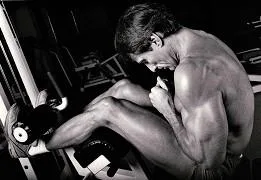
What most trainers call a crunch is in reality a partial sit-up. Lying flat on the floor, the head and shoulders are lifted off the ground while the hips remain stationary. This does work the abs but not as good as doing it this way: elevate the feet by putting them up on a bench so that calves and hamstrings form a right angle. Then raise only the head off the floor by rolling your forehead foreward, keeping the shoulder blades in contact with the floor. At the same time, thrust the hips a few inches up in the air. Raising head and hips at the same time results in a true "crunch" creating maximum tension in the entire rectus abdominal area, especially the upper portion. When head and hips are raised, pause momentarily for one or two seconds, tensing the abs as hard as possible. This takes a little practice to coordinate at first, but it results in a highly effective ab exercise. You can also do a twisting crunch by putting one arm behind the head and tilting to one side as you do each rep. Do 20 or more reps to one side and then the same to the other side. Before long you will be doing 100 reps per set like I do.
One thing you should never do is hold weight on your forehead or behind your neck when doing crunches. This could build the upper abs which are attached to the ribcage and cause the upper abs to thicken resulting in a protruding upper waistline. I've seen it on clients and it ain't pretty. And I would never do Roman chair situp or regular situps for this same reason.
I'm a firm believer in exercising abs every workout, usually at the end, but the beginning of the workout is good too because this way you pay more attention to them, and they are useful as a warmup. To get great abs I gradually increase the total amount of reps I do over time, eventually going as high as 1000 reps per day. This vast number of reps is comprised of more than crunches (as good as they are). I add leg raises to target more lower abs and seated twist to focus on obliques. More ab work along with increased cardio time and stricter dieting over time gives me the small muscular waistline I want.