
The 3 Aminos Human beings elicit two basic drives in life: 1. To go up, get motivated, energized, and focused in order to get the job done. To help accomplish this they usually drink coffee or take stimulants. And 2. To come down, relax, chill out, fall asleep. This specific effect is usually brought on by alcohol or sedatives for many people. Aside from these two basic drives, there is another: to avoid hypertension, stay calm, relaxed and alert during the day. This is often done with various prescription medications. Instead of resorting to potentially harmful drugs to accomplish life's basic drives, three amino acids can be used to create these desired effects. They are L-glutamine, L-tryptophan, and L-arginine.
L-GLUTAMINE is an amino acid found in proteins of all life forms. It is classified as a semi-essential or conditionally essential amino acid. This means that under normal circumstances the body can synthesize sufficient L-glutamine to meet physiological demands. However, there are conditions where the body cannot do so. Recently, L-glutamine has come to be regarded as one of the most important of the amino acids when the body is subjected to such metabolic stress situations as trauma (including surgical trauma), cancer, sepsis and burns. Under such conditions, L-glutamine becomes an essential amino acid, and it is therefore very important to ensure adequate intakes of the amino acid in order to meet the increased physiological demands created by these situations.
L-glutamine is a very versatile amino acid and participates in many reactions in the body. It is important in the regulation of acid-base balance. L-glutamine allows the kidneys to excrete an acid load, protecting the body against acidosis. This is accomplished by the production of ammonia, which binds hydrogen ions, to produce ammonium cations that are excreted in the urine along with chloride anions. Bicarbonate ions are simultaneously released into the bloodstream. L-glutamine helps protect the body against ammonia toxicity by transporting ammonia, in the form of L-glutamine's amide group, from peripheral tissues to visceral organs, where it can be excreted as ammonium by the kidneys or converted to urea by the liver. L-glutamine serves as the most important nitrogen shuttle, supplying nitrogen for metabolic purposes (from glutamine-producing tissues, such as skeletal muscle) to glutamine-consuming tissues.
L-glutamine participates in the formation of purine and pyrimidine nucleotides, amino sugars (such as glucosamine), L- glutamate and other amino acids, nicotinamide adenine dinucleotide and glutathione. It also participates in protein synthesis, energy production and, if necessary, the production of D-glucose and glycogen. Importantly, L-glutamine can serve as the primary respiratory substrate for the production of energy in enterocytes and lymphocytes. L-glutamine is considered an immune- nutrient, and supplemental L-glutamine is used in medical foods for such stress situations as trauma, cancer, infections and burns.
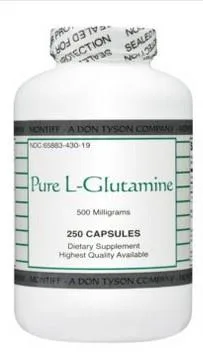
The typical dietary intake of L-glutamine is 5 to 10 grams daily. Supplemental L-glutamine may have immunomodulatory, anticatabolic/anabolic and gastrointestinal mucosal-protective actions. It may also have antioxidant activity. Supplemental L- glutamine's possible immunomodulatory role may be accounted for in a number of ways. L-glutamine appears to play a major role in protecting the integrity of the gastrointestinal tract and, in particular, the large intestine. During catabolic states, the integrity of the intestinal mucosa may be compromised with consequent increased intestinal permeability and translocation of Gram-negative bacteria from the large intestine into the body. The demand for L-glutamine by the intestine, as well as by cells such as lymphocytes, appears to be much greater than that supplied by skeletal muscle, the major storage tissue for L-glutamine. L-glutamine is the preferred respiratory fuel for enterocytes, colonocytes and lymphocytes. Therefore, supplying supplemental L- glutamine under these conditions may do a number of things. For one, it may reverse the catabolic state by sparing skeletal muscle L-glutamine. It also may inhibit translocation of Gram-negative bacteria from the large intestine. L-glutamine helps maintain secretory IgA, which functions primarily by preventing the attachment of bacteria to mucosal cells.
The anticatabolic/anabolic activity of supplemental L-glutamine can be explained by its effect in sparing skeletal muscle L-glutamine stores. Following ingestion, L-glutamine is absorbed from the lumen of the small intestine into the enterocytes. Absorption is efficient and occurs by an active transport mechanism. Some metabolism of the amino acid takes place in the enterocytes. L-glutamine that is not metabolized in the enterocytes enters the portal circulation from whence it is transported to the liver, where again some portion of the amino acid is metabolized. L-glutamine is not metabolized in the liver and enters the systemic circulation, where it is distributed to the various tissues of the body. L-glutamine participates in various metabolic activities, including the formation of L-glutamate catalyzed by the enzyme glutaminase. It also participates in the synthesis of proteins, glutathione, pyrimidine and purine nucleotides and amino sugars. The transport of L-glutamine into cells is via an active process. L-glutamine is eliminated by glomerular filtration and is almost completely reabsorbed by the renal tables.
Glutamine may help protect against some of the side effects of cancer chemotherapy and radiotherapy. There is some evidence that glutamine can help protect against some of the immune impairment that is sometimes seen in exercise "overtraining." Lower resting levels of plasma glutamine have been observed in some athletes suffering from overtraining syndrome, characterized, in part, by transient immunosuppression. In a few preliminary studies, oral glutamine supplementation appears to improve some measures of immunity and to decrease post-exercise infection. In a placebo-controlled study examining infectious morbidity in multiple trauma patients, oral glutamine was credited with significantly reducing the incidence of pneumonia, sepsis and bacteremia. In another recent randomized study of critically ill patients, supplementation with oral glutamine was said to have significant hospital cost benefits, reducing cost per survivor by 30%.
Oral glutamine might help curb alcohol craving. One study demonstrated a significant decrease in voluntary alcohol consumption in rats supplemented with glutamine. A subsequent small, uncontrolled study focused on a group of subjects with extensive history of alcoholism. Considerable improvement was noted.
Pregnant women and nursing mothers should avoid supplemental L-glutamine unless prescribed by a physician. Those with renal or hepatic failure should exercise caution in the use of supplemental L-glutamine. Doses of L-glutamine up to 21 grams daily (Frank takes 5 to 10 grams) appear to be well tolerated. Reported adverse reactions are mainly gastrointestinal & not common & include constipation and bloating.
Human growth hormone: Concomitant use of L-glutamine and human growth hormone may enhance nutrient absorption in those with severe short bowel syndrome.
L-glutamine is available in capsules but since it has a semi-sweet taste, powder form may be preferred since it absorbs faster. Since L-glutamine is unstable in water, fresh solutions should be prepared daily. Those who use supplemental L-glutamine as a possible ergogenic aid use between 1.5 to 4.5 grams daily, taken between meals. I personally use 1.5 teaspoons of glutamine daily in a pre-workout drink and my muscles feel more solid. I've been using L-glutamine in high pharmaceutical grade powder form since the 1970s on a regular basis.
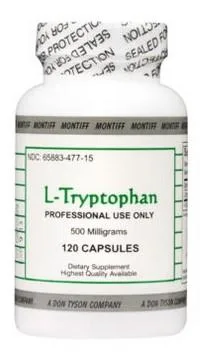
L-TRYPTOPHAN is available in capsule form and used along with other medications to treat mental depression, seasonal affective disorder, insomnia, carbohydrate cravings. Also, L-tryptophan is used along with lithium to treat bipolar disorder. Pregnancy: L-tryptophan has not been shown to cause birth defects or other problems in humans. Breast-feeding: It is not known whether L-tryptophan passes into breast milk. However, L-tryptophan has not been reported to cause problems in nursing babies. Children: Studies on tryptophan have been done only in adult patients, and there is no specific information comparing use of L-tryptophan in children with use in other age groups. Older adults: There is no specific information comparing use of L-tryptophan in the elderly with use in other age groups. Other medicines: When you are taking L- tryptophan, it is especially important that your doctor and pharmacist know if you are taking any of the following: Lithium (e.g., Eskalith) or Monoamine oxidase (MAO) inhibitor activity (isocarboxazid [e.g., Marplan], phenelzine [e.g., Nardil], procarbazine [e.g., Matulane], selegiline [e.g., Eldepryl], tranylcypromine [e.g., Parnate]) - Using these medicines with L-tryptophan may increase the chance of undesirable side effects L-tryptophan is best taken with a low-protein, carbohydrate-rich meal or snack to assist in the transportation to the brain and the conversion to serotonin. Dosing: For oral dosage forms (capsules): Generally, 500 mg. per 50 pounds of bodyweight on any empty stomach one half hour before bed is recommended to bring on drowsiness. For mental depression: Adults - 8 to 12 grams per day, given in 3 to 4 equally divided doses (this high dosage is bound to cause excessive grogginess, so don't drive!) Do not take a dosage higher than the minimum necessary to let it assist the condition you are taking it for. Storage: Store away from heat and direct light. Do not store the capsule form in the bathroom, near the kitchen sink, or in other damp places. Heat or moisture may cause it to break down. Since tryptophan (depending on the dosage amount) may cause some people to become drowsy, dizzy, or less alert than they are normally, make sure you know how you react before you drive, use machines, or do anything else that could be dangerous if you are dizzy or are not alert. Tryptophan may cause dryness of the mouth. Using sugarless candy or gum, ice, or a saliva substitute may be helpful.
I've been using L-tryptophan on a regular basis for many years. I first noticed its effect on muscle growth when training for Mr. Olympia in 1976. I'd work out from 8 to 10 am, come home and take 3 to 4 grams of tryptophan and a little carbohydrate. Then one-half hour later I'd eat lunch, wait until I began to feel drowsy, then take a 2-to-3-hour nap. I grew bigger and stronger over a period of months. The night before the Mr. Olympia that year the noisy room in which I was staying made it difficult to fall asleep, so I took 10 grams of tryptophan with fruit over a period of one hour and even though I only slept a few hours, I looked in the best shape of my life the next day for the competition. I take L-tryptophan on a regular basis as follows: one capsule (500 mg. with 6 Super Sports Amino Acid capsules contain no tryptophan) twice a day between meals with a little carbohydrate, and 2 to 4 grams of L-tryptophan one half hour before bed with a small piece of fruit. The sleep-inducing effect lasts a good six hours. L-ARGININE The endothelium (internal lining of blood vessels) plays a crucial role in the maintenance of vascular tone and structure. One of the major endothelium-derived vasoactive mediators is nitric oxide (NO), an endogenous messenger molecule formed in healthy vascular endothelium from the amino acid precursor L-arginine.
Endothelial dysfunction is caused by various cardiovascular risk factors, metabolic diseases, and systemic or local inflammation. One mechanism that explains the occurrence of endothelial dysfunction is the presence of elevated blood levels of asymmetric dimethylarginine (ADMA)--an L-arginine analogue that inhibits NO formation and thereby can impair vascular function. Supplementation with L-arginine has been shown to restore vascular function and to improve the clinical symptoms of various diseases associated with vascular dysfunction. Endothelium plays a crucial role in the maintenance of vascular tone and structure. One endothelium-derived vasoactive mediator with major importance is nitric oxide (NO), which is formed from the amino acid precursor L-arginine by the enzyme endothelial nitric oxide synthase (eNOS). NO is involved in a wide variety of regulatory mechanisms of the cardiovascular system, including vascular tone (it is the major mediator of endothelium-dependent vasodilation), vascular structure (inhibition of smooth muscle cell proliferation), and cell-cell interactions in blood vessels (inhibition of platelet adhesion and aggregation; inhibition of monocyte adhesion). Dysfunction of the endothelial L-arginine/ nitric oxide pathway is a common mechanism by which several cardiovascular risk factors mediate certain deleterious effects on the vascular wall. Among these are hypercholesterolemia, hypertension, smoking, diabetes mellitus, homocysteine, and vascular inflammation. Supplementation with L-arginine in animals with experimentally induced vascular dysfunction atherosclerosis improves endothelium-dependent vasodilation. Moreover, L-arginine supplementation results in enhanced endothelium-dependent inhibition of platelet aggregation, inhibition of monocyte adhesion, and reduced smooth vascular muscle proliferation. ADMA is a Novel Cardiovascular Risk Factor. In 1992, Vallance et al first described the presence of asymmetric dimethylarginine (ADMA) as an endogenous inhibitor of eNOS in human plasma and urine. ADMA inhibits vascular NO production within the concentration range found in patients with vascular disease. ADMA also causes local vasoconstriction when infused intra-arterially and increases systemic vascular resistance and impairs renal function when infused systemically. Currently available experimental and clinical evidence suggests even small modifications of ADMA levels significantly change vascular NO production, vascular tone, and systemic vascular The Role of ADMA for Explaining the Beneficial Effects of Nutritional L-Arginine Supplementation: Circulating L- Arginine concentrations have been found to be within the normal range in most clinical conditions associated with endothelial dysfunction. Few patients experience pathologically low L-arginine concentrations. However, clinical and experimental evidence suggests elevation of ADMA can cause a relative L-arginine deficiency, even in the presence of "normal" L-arginine levels (which may, in fact, be too low in these conditions). As ADMA is a competitive inhibitor of eNOS, its inhibitory action can be overcome by increasing the concentration of the enzyme's substrate, L-arginine. ADMA levels may be increased in conditions associated with cardiovascular diseases. . A beneficial effect of L-arginine on vascular function has been found by several different groups of investigators in patients with impaired vascular function, whereas little or no effect is usually noted in healthy controls. This makes sense, as the molecular function of L-arginine, as detailed above, is to restore endothelial NO production to normal, thereby normalizing vascular function. By replenishing eNOS with its natural substrate, no vasodilator effects beyond the physiological range can be expected. Thus, no exaggerated hypotensive action, orthostatic dysregulation, or adverse cardiac events related to reflex tachycardia need be considered. In contrast to L-arginine, exogenous NO donors such as organic nitrates, which release NO after enzymatic conversion by the activity of enzymes different from eNOS, are associated with tolerance development and oxidative stress to the arterial wall. In this respect, there is ample evidence to consider L-arginine a safe and beneficial dietary supplement.
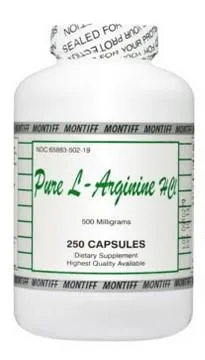
Arginine supplementation has been effective in the treatment of cardiovascular dysfunction. In an uncontrolled trial, seven of 10 people with intractable angina showed significant improvement after taking 9 grams of arginine daily for three months. Significant decreases in cell adhesion molecules and pro-inflammatory cytokine levels were also observed. A double-blind trial in 22 patients with stable angina and healed myocardial infarction showed oral supplementation with 6 g arginine daily for three days increased exercise capacity. Congestive Heart Failure: Patients with congestive heart failure (CHF) have reduced peripheral blood flow at rest, during exercise, and in response to endothelium-dependent vasodilators. Nitric oxide formed from arginine metabolism in endothelial cells can contribute to regulation of blood flow under these conditions. A randomized, double-blind trial found six weeks of arginine supplementation (5.6-12.6 g per day) significantly improved blood flow, arterial compliance, and functional status compared to placebo. Another double-blind trial found arginine supplementation (5 grams three times per day) improved renal function in individuals with CHF. Hypertension: Hypertension is a major healthcare problem afflicting nearly 50 million people in the United States. Despite its strong causal association with cardiovascular disease complications, including myocardial infarction, heart failure, and stroke, the majority of patients with hypertension do not achieve optimal blood pressure control. The prevalence of hypertension is expected to increase with the aging population, growing obesity, and rising incidence of metabolic syndrome. Endothelial dysfunction and reduced NO bioactivity represent prominent pathophysiological abnormalities associated with hypertensive cardiovascular disease. Individuals with hypertension exhibit blunted epicardial and resistance vascular dilation to NO in the peripheral and coronary circulation that likely contributes to mechanisms of altered vascular tone in hypertension. L- arginine has been shown to reduce systemic blood pressure in some forms of experimental hypertension. Erectile Dysfunction: Erectile dysfunction (ED) is defined as the persistent inability to attain and maintain an erection sufficiently to permit satisfactory sexual intercourse. According to the National Institutes of Health, ED has been reported to affect as many as 20-30 million men in the United States and 152 million men worldwide. The risk for ED increases progressively with advancing age, with an estimated 54 percent of men ages 65-70 reporting some degree of impotence. It is believed 85-90 percent of ED cases are related to physical or medical condition, while 10-15 percent are due to psychological causes.
Erectile dysfunction is an important part of the total clinical picture in primary care, not only for its psychosocial significance, but also as a possible early indicator of general vascular compromise. ED can be an early indicator of cardiovascular disease, caused by an underlying dysfunction of the arteries and vascular system. ED is commonly associated with a number of conditions frequently occurring in aging men, including prostatic hypertrophy, ischemic heart disease, peripheral vascular disease, hypertension, atherosclerosis, hyperlipidemia, stroke, and diabetes mellitus.
In a group of 15 men with ED, six in the group taking 2.8 g arginine daily for two weeks experience benefit, compared to no improvement in the placebo group. Although little is known about how effective arginine will be for men with erectile dysfunction or which subset of men would most likely be helped, available research looks promising and suggests that at least some men will benefit. In a controlled clinical trial, 50 patients with ED were treated with 5 g L-arginine daily or placebo for six weeks. Nine of 29 patients were taking L-arginine (31%), but only two of 17 patients taking placebo (11.7%), reported significant improvement of sexual function. In the nine responders, significant increases in plasma and urinary nitrate were measured after treatment with L-arginine, indicating improved NO production secondary to this treatment.
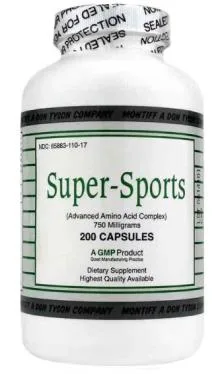
Supplemental L-arginine improves endothelial function, myocardial perfusion, angina, erectile dysfunction, and exercise tolerance. If you think using these 3 aminos isn't important you should reconsider. They are best taken with the Super Sport Free Form Aminos to prevent imbalances from occurring. I have always made all of these a part of my supplement regimen. https://frankzane.com/products/supplements/