
The relative size of one body part compared to another is the first major aspect of proportion in bodybuilding. Muscle shape and definition are also important because they are eye catching. In other words, a perfectly proportioned body would have all areas equally developed so that no one body part stands out. They all stand out individually and when the body is seen as a whole it is even more impressive.
One sure way to rate a body's proportion is to view it from about 40 feet. A quick glance will attract your attention to an area that stands out above the other body parts. This is not perfect proportion. It is out of proportion.
Proportion has a more inclusive meaning than symmetry, although it is often called 'symmetry.' Symmetry simply means the balance of the left side with the right side. A mirror image would indicate perfect symmetry. Proportion means everything developed but nothing overdeveloped in relation to everything else.
In the NABBA Professional Mr. Universe 1972, I weighed between 195 and 200. Even though my upper body was smaller than later in the 1979 Mr. Olympia, my massive thigh size accounted for more bodyweight. My thighs overshadowed my upper body development. In 1979 Mr. Olympia I weighed 191 with smaller more defined thighs and bigger more muscular upper body. Better proportion.
Photos always helped with this type of analysis, you can judge your proportion and your outline. Studying your image is always the first step to improving it.
How did I improve my proportion?
It's not such a bad thing when your leg development is ahead of your upper body as it was in my case. You just don't want it to stay that way. It's much easier to squat less than it is to do more squats because squats take a lot out of you.
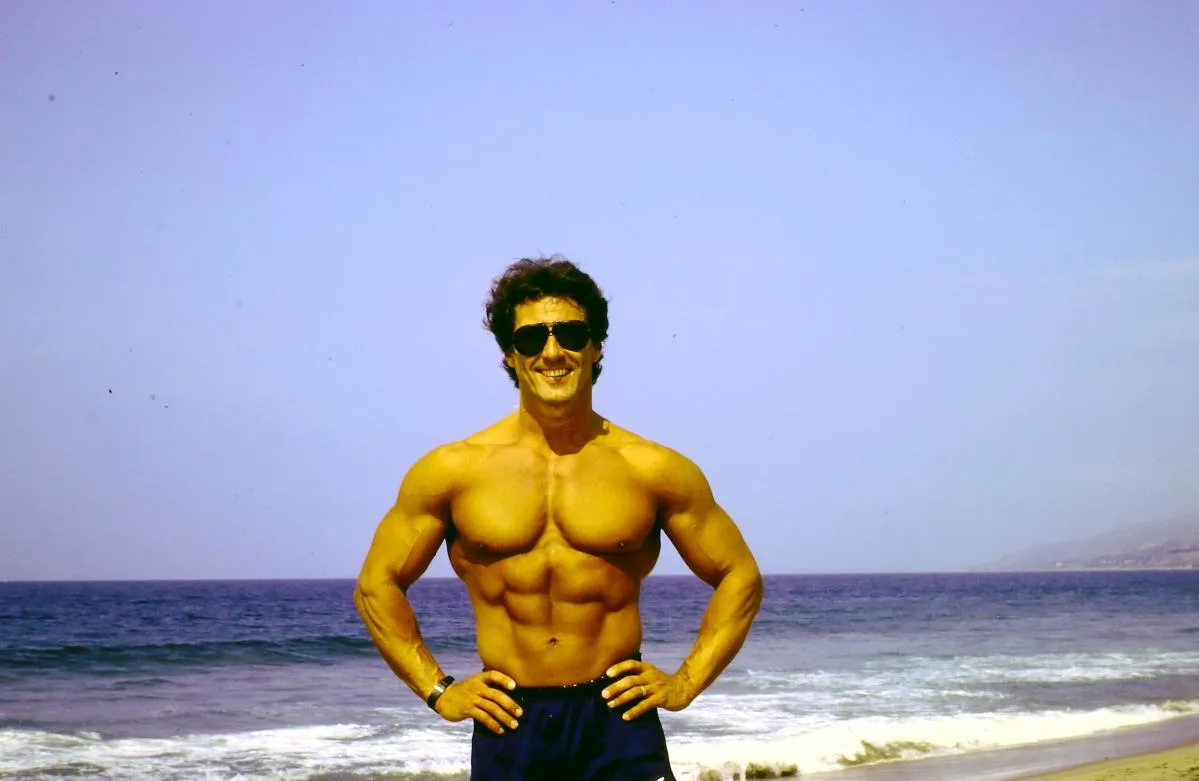
So, it wasn't hard to lighten up on squats and after my 10 reps with 405 squatting with Arnold in 1972 I never went that heavy again concentrating more on leg extensions and leg curl, leg press, and Leg Blaster squats. My bodyweight dropped because of the reduced thigh mass but my overall look became much more proportionate. And my knees and lower back felt better. I could tell by comparing photos from previous years (1972 and earlier) that my thighs were getting smaller but more defined and my calves were growing. My waist also got smaller because heavy squatting with the bar on your back forces the gut out as you descend into the low squat position. The midsection can't help but grow when this is the case. Leg Blaster squats helped me keep the focus on my thighs shape and definition without building my glutes and lower back.
I also had in mind the look I was after small muscular waistline, wide shoulders and lats, lateral and rear head of deltoid matching front deltoid, pecs not too big especially lower pecs, thighs not overdeveloped, calves right size in relation to thighs, muscular back. Every time I took photos, I checked to see how the look was progressing and took steps to add or subtract from areas as needed.
Study your silhouette.
Take photos with your body blocking the sun. This is best done late in the afternoon when the sun is low on the horizon and take your light reading from the sky not your body. The body will come out dark and you'll see your silhouette. Studying the outline not the details will help you keep muscle sizes in relative proportion.
Perfect proportion is the final step in the quest for the complete body. It doesn't happen overnight.