
Frank Zane, M.A.
3 Time Mr. Olympia
Bulking up means packing on a lot of bodyweight in a relatively brief period of time. Is this productive or are you wasting your time? My advice based on my own experience is don't do it. Quality muscle takes time to develop - it's better to add not more than 5 pounds of solid muscle a year by training and eating right than to gain 30 or 40 pounds of surplus tissue, much of which is fat and water retention. When you train down and lose the excess bulk you will most likely find yourself in the same place where you started, often a year later, a year wasted.
There are only two circumstances that may make bulking up feasible: 1. The bodybuilder is a teenager and has an ample supply of hormones, enough testosterone that allows muscle to be packed on faster than normal, completely natural. As a teenager I gained from 140 pounds at age 14 to 170 pounds by age 17 just by training regularly and eating right. 2. The only other way for a bodybuilder who has reached physiologically maturity to gain muscle mass quickly is by using high dosages of anabolic steroids and hormones, training heavy (which the steroids allow one to do because of increased strength), and eating large amounts of calories. Muscle mass maximizes, but along with the increased muscle girth comes a thicker layer of subcutaneous fat, a bigger stomach, and often higher blood pressure. The older the bodybuilder the greater the health risks.
Muscle mass obtained in a hurry never results in shapely muscle and good proportions, this is pretty much what we see in bodybuilding today, no unique physiques, a plethora of assembly line bodies stamped out in a common mold. But everyone is in a hurry to get big, no one has the patience and common sense to take their time and do a good job and the result is a similarity of big, bloated bodies. How are they doing it?
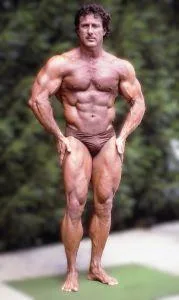
No medical blood testing is done, so hormone levels are usually off the charts, with many of those who imbibe on an overdose basis experiencing "roid rage." When testosterone levels get too high aggression becomes out of control and the slightest provocation throws the bodybuilder into a rage. Sometimes he's fortunate and can take it out on the weights, but oftentimes, people get in the way to their detriment. Blood pressure often increases dramatically. This is especially dangerous for mature bodybuilders whose blood pressure tends to become slightly elevated. Not only that, BUT LDL cholesterol levels ALSO climb, and the blood thickens increasing clotting tendency which increases the risk of stroke. But bigger bodies are the rage, and many are willing to risk their well- being to win a trophy.
Of course, if you have a fantastic metabolism and your body can turn food and exercise into muscle expediently you may be able to do this without pharmaceutical enhancement, but this is not usually the case. Usually, such well-endowed bodies are using what everyone else in competition is to keep the playing field level. I don't believe there are many exceptional natural bodies around these days.
If you just eat a lot and train heavily without doing much aerobics you can gain weight rapidly, well above your ideal limit. Then you end up a fat person and must lose it all to look decent again. Even drug enhanced bodies experience the same phenomenon. It's best to not gain more than 5% over your best-looking bodyweight and train at that weight. When it comes time to reach your peak you don't have a lot of fat to shed, and you can focus on developing quality definition and improving your proportions.
Yes, I am guilty of bulking up, you would think I know better after training all this time and in the beginning, I can blame this mistake on inexperience. But in more recent times I have no other excuse but the obsession with bigger muscles. Here are some examples of the mistakes I've made.
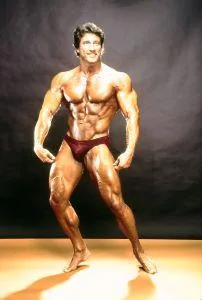
My first big bulking up experiment was in 1965 when I pushed my bodyweight up to 220 pounds. Teaching school in New Jersey at the time, I trained after school in a makeshift gym I'd set up in the locker room and I worked up to 3 sets of 20 reps with 325 pounds in the full squat. My thighs ballooned to 27 and 1/2 inches, my waist went up to 38, but my arms only increased a half inch in size and my chest only an inch. After looking at myself in the mirror I dropped to 210 and by the time I'd moved to Florida a year later I finally looked good after dropping to 190, the same place I started. A whole year lost.
Next time was training for the 1972 Mr. Universe contest, I bulked up to 208 by squatting 10 reps with 405, got a lower back injury, suffered with it for weeks, but managed to win at a bodyweight of 195 although not as muscular as I would have been had I not gotten so heavy. I asked myself, "If I'm going to compete at 195 what's the sense of going up to 208 only to have to lose 13 pounds to look good again?"
Nowadays, I keep my bodyweight in the 170s range. When it creeps up over 175 I up my aerobics and abdominal work and cut down on the carbs and fats. It's best to weigh less as you get older, carrying around a lighter body is a lot easier than navigating a bulky carcass. And I feel much better too. What muscle I do gain may be a few pounds a year in the right places by focusing on the big muscle groups like thighs and back but not at the expense of my overall proportion and certainly not risking my overall muscular definition.