
Before you can change anything, you must first become aware of it. This is called feedback which means knowledge of results. How well you are doing in your training progress will be reflected in how your body is changing. Two practices are important here. The first is to keep a workout diary or journal where you write the exercises, weights and repetitions, along with a food journal where you keep track of what and how much you eat and then look up the values. Keeping records of how you train and what you eat will give you the opportunity to compare this information to how you look.
In bodybuilding it's important to learn to see yourself as others see your body. Looking in the mirror is not enough, you see what you expect to see. Taking photo- graphs is the best method to evaluate your progress and develop body awareness. I've done this in the past, especially when preparing for competition and even now when I have a distinct goal in mind that I'm training to reach. Every 3 to 4 weeks out comes the camera to give me proof of my progress. Seeing how your body is improv- ing is the best ongoing motivation you can have to sustain your training drive.
With the advent of digital cameras keeping records of progress becomes very easy. You can use a tripod or have someone take your photos in relaxed front, side, and back positions and with hands on hips from the front, arms flexed from the front and back. Outdoors is best when the sun is at a 45 to 60 degree angle with the hori- zon so there are no distinct shadows on the body. I've always preferred 8 am to 10 am depending on the season. Try to duplicate the lighting conditions and use a plain background each time so you can get accurate comparisons.
Most people who train are only incidentally aware of their improvement. Their trousers may become loose around the waist, they may drop a few pounds on the scale, their friends may mention they look younger. But photos don't lie, and they should become part of the archives of your progress. Digital photos can be stored on CDs and last forever. You'll be glad you did this later on and these records will be- come valuable. Mine have. What you see in this book is evidence of this practice.
2 Types of Motivation
Many people begin working out when they become dissatisfied with their physi- cal condition. They don't like the way they look or feel. They've dropped to the lowest level their sense of self-esteem will allow and now it's time to do something about it. This is called deficiency motivation. You are driven into action because you don't like where you are. Your goal is to be somewhere else, in a more desirable place, looking and feeling better.
It happens every year. Go to a commercial gym in December, especially late in the month and it's relatively empty, everybody is eating, drinking, partying, celebrat- ing the holidays, overindulgence is the norm. Go back in January and the gym is packed with people who have gained mounds and pounds of fat. And they don't like being this way. Getting in shape by summer is on their minds and the gym stays crowded during January, starts to taper off in February, and by March and especially when the weather warms up, the place is back to normal.
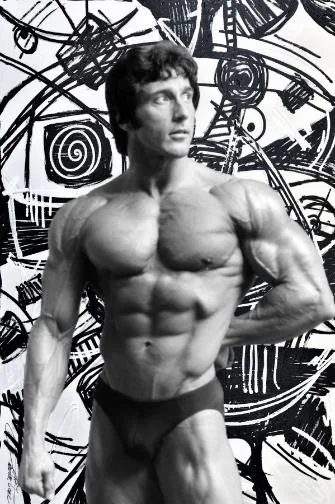
Now if the only reason people have to drive or motivate themselves is this new disdain they have for their out of shape bodies, this training enthusiasm will not last. If you can become motivated to act only by how low you sink physically then you will train, improve, but not become fully aware of your improvement. You may stop or slow down because something more interesting comes along, maybe some new exer- cise or eating fad that's going to do it for you, and you gradually return to your out of shape condition. If you are not made fully aware of the progress you are making, then it is very likely you will not persist and continue to improve in your training.
Being made aware of your progress develops success motivation. You are mo- tivated by your accomplishment. And you want more, so you continue to train and continue to improve. You become aware of your progress by taking photographs over time and studying them. That's why there are progressive training programs in this book. Start with the full body program for beginners; make it past that stage and move to the two way split routine; persist in your workouts and improvement and graduate to the three way split routine. But if you can only be motivated by how out of shape you let yourself become by giving up training after you lose interest due to lack of feedback, then you only need a beginners routine. Cuz you will never make it past that. Awareness is the key. Before you can change anything, you must first become aware of what needs to be altered. Photos tell you this. You must do it. If you don't, you will not just stay in the same shape. You will regress. The body is always changing either for better or worse. It's your choice.
Many people don't realize that they make the choice as to how their bodies de- velop over time. Bodybuilders make this choice consciously - they follow a specific training routine, a nutritious diet, get enough rest, and have the attitude that expects progress. The average out of shape person is not like this. Fatso has something on which to blame his out of shape condition. He doesn't realize that every choice he's ever made has contributed to the creation of his body as it is today. Yes, choices were made but they were not conscious choices. You either choose consciously or your habits, conditioning, your belief system, what you've learned about how circum- stances should be, all these things choose for you. The choice is made uncon- sciously, automatically.
Now since everyone is creating their bodies minute by minute, second by sec- ond consciously or unconsciously by their choices, this means that we have tremen- dous power as creators. We don't have to let bad habits control us, we can take con- trol and make the choices that lead us in the right direction of getting in shape.
What we think and what we say affects what we do. Think the right thoughts and say the right words and you will perform the right actions to get you moving and keep you moving in the direction of your goal. As I've continued to do this for the last 50 years, I realize that the goal isn't the goal. This path I'm traveling is the goal itself.
Bottom line is you need to have a reason to train seriously. Following the in- structions in this book you can make fantastic progress. The commitment to stay motivated is up to you. You must have a goal, anything that drives you to train regu- larly because unless regular training is done no progress is possible. That's why we have routines in this book: the body thrives on routine. Give yourself a reason to train harder, competition serves well in this purpose. The fact that I'd be standing on stage in a bathing suit in front of hundreds of people made me serious about training with commitment. If you are interested in the specific routines, I did over the years check out my Workouts from Personal Training Diaries book.